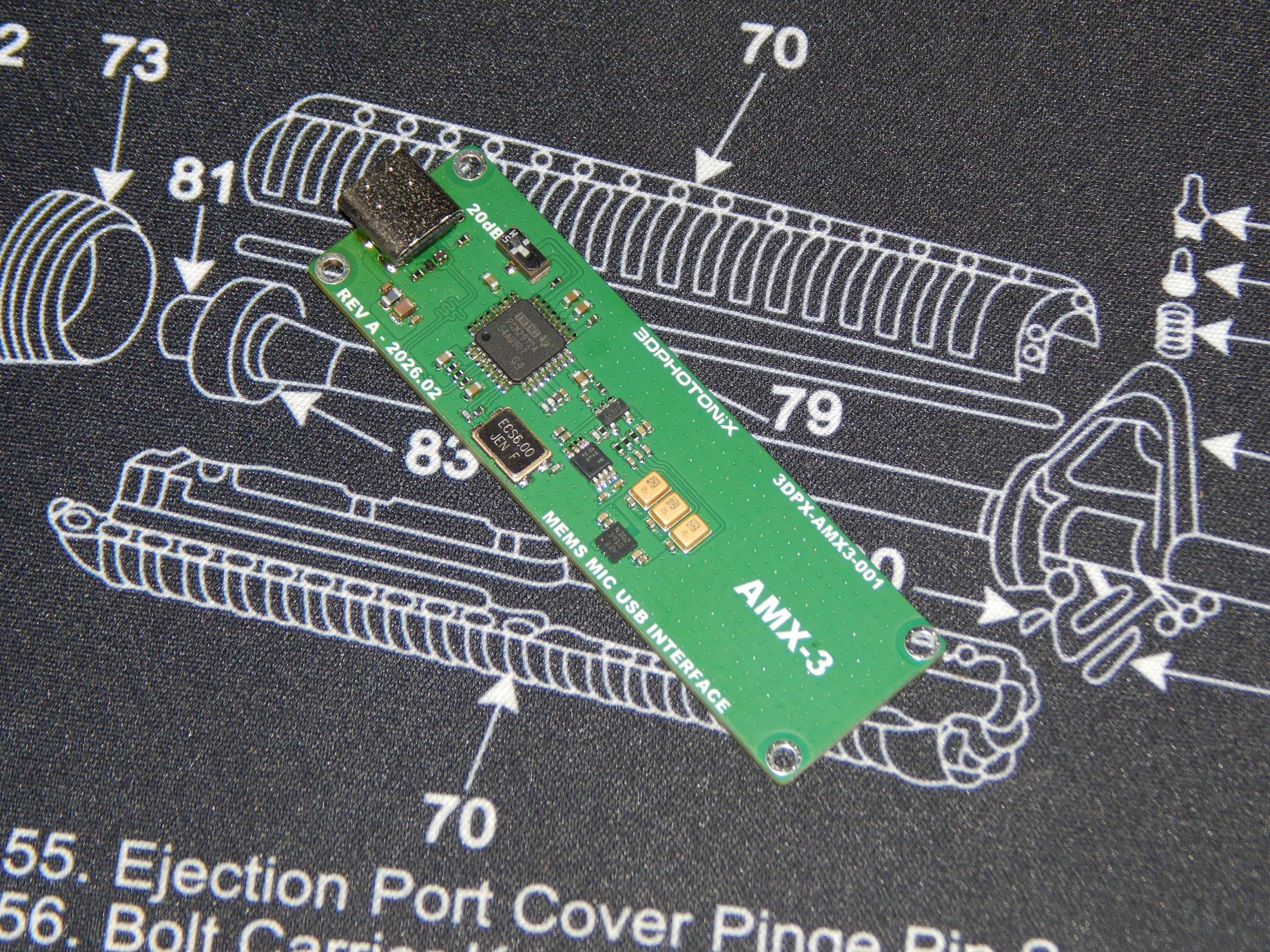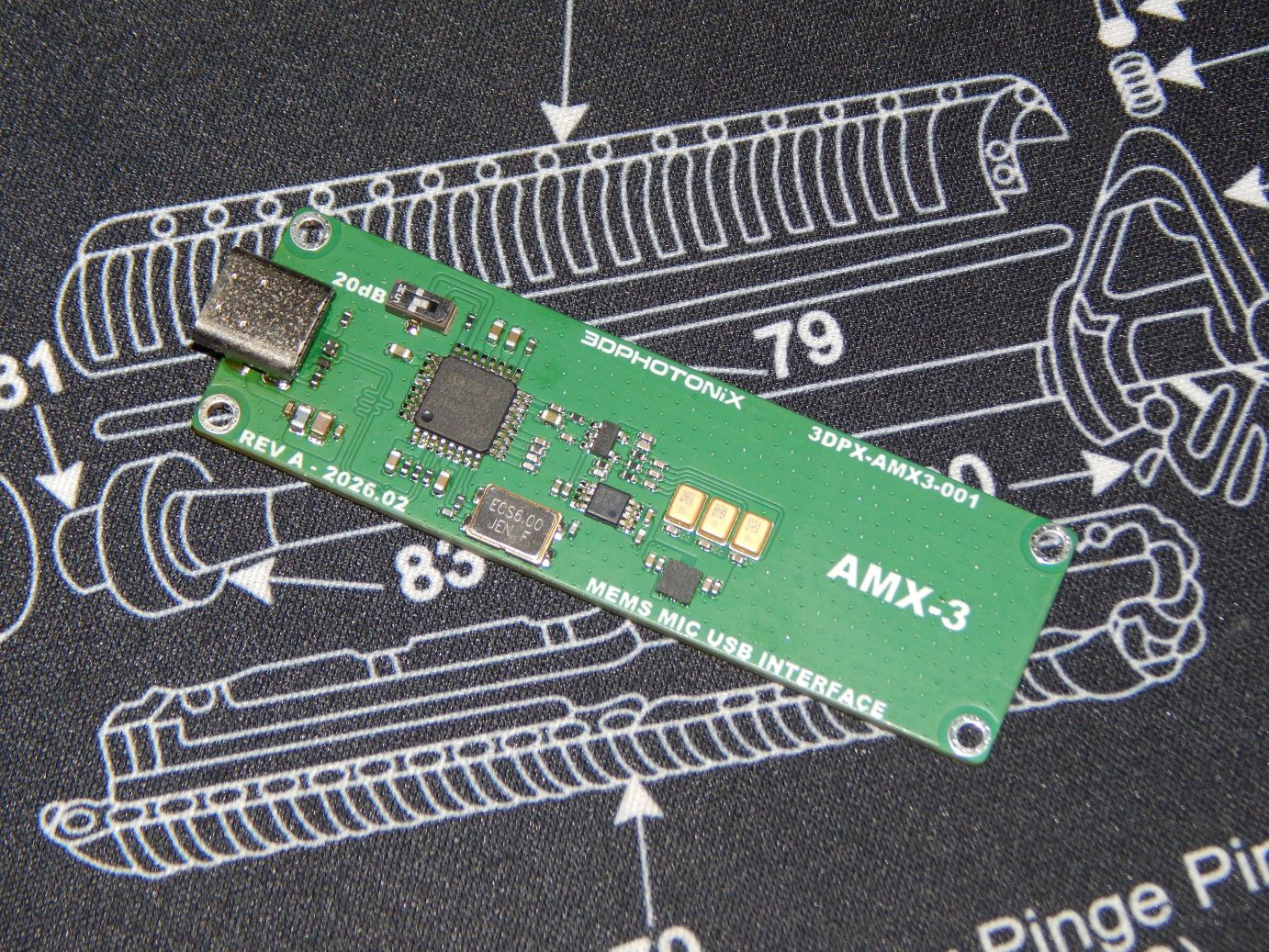
Project Overview
Modern audio systems often require compact and efficient solutions capable of capturing clean signals from multiple microphones. MEMS microphones provide excellent performance in small form factors, but combining multiple sources while maintaining signal integrity requires careful analog design. This project presents a triple MEMS microphone interface that focuses on precision signal conditioning and seamless USB audio integration.

Analog Signal Combination
The design captures three independent MEMS microphone signals and combines them using a precision op-amp configured in an averaging topology. Each microphone output is AC-coupled and fed through matched input resistors into a summing node, ensuring balanced contribution from each source. This approach allows the system to merge multiple signals while preserving amplitude consistency and minimizing distortion, resulting in a clean and stable combined output.
Simulation and Optimization
To ensure optimal performance, the analog front-end was developed and refined using SPICE simulation. The amplification loop, including feedback network and compensation elements, was carefully tuned to achieve stable gain, proper bandwidth, and low noise. This simulation-driven approach allowed precise control of the frequency response and ensured that the output signal remained within the acceptable input range of the USB audio codec IC, avoiding clipping and maintaining signal fidelity.
USB Audio Interface Integration
The conditioned analog signal is then AC-coupled into a USB audio codec, enabling direct conversion to a digital audio stream. By aligning the analog output characteristics with the codec’s input requirements, the design achieves reliable plug-and-play functionality without additional processing stages. The result is a compact and production-ready audio interface that combines efficient analog design with robust digital integration.